Saturday, January 14, 2017

Police work hours must be normalized: union

Police work hours must be normalized: union

By Abraham Gerber  /  Staff reporter
Working hours and performance objectives for police officers should be normalized, the Taiwan Police Union said yesterday, calling for the hiring of additional officers to remedy chronic overwork.
“Work hours should be normalized so that police officers can freely exercise their right to decide whether to work overtime. Even though officers are supposed to work only eight hours a day ‘in principle,’ the reality is that they now work a minimum of 12 hours per day, as overtime has become normalized,” Taiwan Police Union executive director Hsiao Nung-yu (蕭農瑀) said.
Most police forces put a ceiling on the amount of pay or compensatory leave that can be provided for working overtime, instead giving “good service” awards to officers who go over the ceiling, Hsiao said.
She attributed the additional overtime to a chronic failure to replace retiring police officers.
“Given the amount of work, there should be about 100,000 police officers nationwide, but there are only about 60,000, with plans to increase the number to about 70,000,” she said, adding that the 100,000 figure was based on reference standards for local police forces set by the Ministry of the Interior.
Performance standards calling for more cases to be solved are also unreasonable, she said, calling on the National Police Agency to hold talks with lower-ranking officers on revising the standards.
Frequent orders to solve a fixed number of certain case types within a short time span also puts pressure on officers to concentrate on cases involving illegal firearms, stolen vehicles and gambling dens, only reporting their successes when they receive updated orders and quotas, she said.
While the union is seeking talks with the National Police Agency on improving working conditions, it is technically an association devoted to protecting police officers’ labor rights, as it is illegal for police officers to join a formal union.

Premier demands better handling of migrant workers

Premier demands better handling of migrant workers

Staff writer, with CNA
Premier Lin Chuan (林全) at a meeting in Taipei on Thursday asked the Ministry of Labor to improve its management of foreign workers so that there are fewer incidences of migrant workers going missing.
Lin told the ministry to increase the fines handed to recruitment agencies that fail to report missing workers or mistreat migrant workers by proposing an amendment to the Employment Service Act (就業服務法).
Lin also told ministry officials to look into other ways of improving the management of migrant workers.
As of the end of September, 53,561 migrant workers were listed as absent without leave, 31,185 women and 22,376 men, according to statistics released by the National Immigration Agency on Oct. 18.
That represents an increase of 925 on the figure for August, although migrant workers who are found to have left the nation are deducted from the total.
As of the end of September, 609,272 foreigners were employed as construction workers, factory workers, caregivers or in other manual jobs, statistics from the ministry showed.
That means 8.79 percent of migrant workers have gone missing.
Of the missing migrant workers, 26,429 are from Vietnam, 23,669 from Indonesia, 2,561 from the Philippines and 901 from Thailand, the statistics showed.
At the end of January last year, 43,688 migrant workers were listed as missing — the earliest figures available from the agency, with a further 9,873 going missing from January last year to September, which is an average of 494 migrant workers per month

TransAsia Airways employees protest at ministry

TransAsia Airways employees protest at ministry

By Abraham Gerber and Shelley Shan  /  Staff reporters
More than 200 TransAsia Airways employees yesterday protested outside the Ministry of Labor in Taipei, demanding that the ministry intervene to compel the firm to negotiate directly with a newly formed union over redundancy terms.
The protest follows the unexpected announcement by the company on Tuesday that it is to be dissolved, with the airline promptly shutting down operations.
Union deputy executive director Pang Min-yi (龐閔憶) blasted the management team for refusing to recognize the newly formed union as a legitimate partner for conducting negotiations.
“We need the help of a third party to ensure that negotiations are completed swiftly,” he said.
Protesters also demanded that the company be forbidden from arbitrarily laying off workers if it manages to avoid dissolution and called for revisions to the Mass Labor Layoff Protection Act (大量解僱勞工保護法) to explicitly mandate that companies negotiate with unions rather than individual employees about redundancy packages.
The firm’s dissolution could put more than 1,700 employees out of work, many of whom have joined the company union, which was formed after the announcement on Tuesday.
Union representatives demanded that each employee be given NT$500,000 (US$15,661) on top of their regular severance pay and that the company continue to pay wages until Jan. 21 because of its obligation to provide employees with 60 days’ notice.
Lo Wen-chuan (羅文娟), an official at the Ministry of Labor, said that the ministry would work with the Taipei City Government to ensure that the negotiations be held as soon as possible.
Separately yesterday, more than half of TransAsia’s pilots joined an information session hosted by EVA Airways.
Civil Aeronautics Administration data showed that TransAsia has about 170 pilots, including those who are in training. EVA and China Airlines have agreed to recruit some of the pilots if they pass the required tests and certifications.
A pilot surnamed Yang (楊) said he had already retired from TransAsia after working for the company for 20 years, but was asked to come back after its business suffered following two plane crashes in 2014 and last year.
He said he had resumed work for less than a year when the company announced that it was shutting down.
Yang said he has mixed feelings about the company’s decision, but chose to attend the information session as part of his right as a laid-off worker.
Another pilot who requested anonymity said he used to work in the semiconductor sector, but spent about NT$2 million to attend a pilot school abroad to fulfill his dream of becoming a pilot.
He joined TransAsia 10 months ago and was scheduled to begin flying next month.
He said he is concerned about whether EVA would recruit him. He is over 35 years old and has a family to support.
EVA Pilot Union founder Lin Shao-ming (林邵民) said that EVA has stipulated that it would accept pilots who have accumulated more than 2,000 flight hours.
However, these pilots would first be employed as copilots and can only qualify for promotion after accumulating 3,600 flight hours. They must undergo six to eight months of training in the initial stage, he said.
While almost all of TransAsia’s pilots have accumulated more than 2,000 flight hours, only about 20 of its copilots meet the minimum requirement that EVA has set, Lin said, adding that a majority of the copilots have less than 1,000 flight hours.
As EVA is short of pilots following a fleet expansion, Lin said that he does not oppose the company’s decision to recruit pilots from TransAsia.
However, EVA must not forget that 30 to 40 of its copilots are waiting to be promoted to pilots, he added.
China Airlines is scheduled to hold an information session for pilots today at TransAsia’s headquarters in Taipei.

Most employees want to change jobs, poll shows

Most employees want to change jobs, poll shows

Staff writer, with CNA
With the economy improving, nearly 81 percent of workers want to quit their current jobs for new ones, even before receiving their year-end bonuses, a survey by online job bank yes123 showed.
The survey, which was conducted earlier this month and released on Tuesday, showed that 80.9 percent of the 1,258 respondents said they would like to change jobs earlier to take advantage of a rebounding economy.
The economy is expected to grow 1.22 percent this year and expand 1.88 percent next year, according to the latest government forecast.
However, with annual growth rising by a better-than-
expected 2.06 percent in the third quarter, the forecast is likely to be upgraded later this month.
The survey showed that among workers who want to change jobs before the start of the Lunar New Year holiday, which runs from Jan. 27 to Feb. 1, 63 percent have already sent out resumes.
The main reason cited for wanting to change jobs is most — or 44 percent — said they are not earning enough to make ends meet, the poll found.
Meanwhile, 32.2 percent are worried that they have no chance of being promoted, 30.3 percent are pessimistic about their companies’ outlook, 28.3 percent are dissatisfied because they have not received a pay hike and 26.3 percent are simply not happy at their current jobs, the survey showed.
Workers who are seeking new jobs are expecting an average salary increase of NT$7,946, the poll showed.
Citing another recent survey, yes123 said 87.4 percent of employers would start job recruitment before the Lunar New Year holiday.
The average starting salary offered by those employers is NT$33,328 per month, which is about 9 percent higher than the average a year earlier, the job bank said.
Last year, 78.6 percent of workers said they wanted to change jobs around the time of the Lunar New Year, compared with 71.3 percent in 2014, yes123 polls showed.
The two surveys were conducted from Nov. 3 to Wednesday last week and had a confidence level of 95 percent, with margins of error of 2.76 and 3.31 percentage points respectively.

Association calls for more paid leave to care for family

Association calls for more paid leave to care for family

By Abraham Gerber  /  Staff reporter
Labor regulations should be reformed to allow workers to take up to six months of paid leave to arrange for long-term care of family members, the Taiwan Association of Family Caregivers said yesterday.
Arranging for long-term care can be an extremely chaotic process, as families face choices such as doing the caretaking on their own or hiring a foreign caregiver, association president Chen Chen-fen (陳正芬) said.
“Families need time to hold discussions before making a decision,” she said, adding that an average of 180,000 people leave the workforce annually to provide care for family members.
“We hope that the government can provide a kind of work insurance, allowing workers to continue drawing salaries while making arrangements [for long-term care] to help us hold on to much of this lost labor,” she said.
Workers are currently only allowed seven days off to make arrangements for long-term care for a family member.
“If these people can be kept in the workforce without sacrificing care for their family members, their income can be stabilized, which can help keep them out of poverty,” she said.
Funding could come from the Ministry of Labor’s Employment Security Fund, she said, but added that the association was not sure how much funding would be needed.
She said the fund could also be used to provide one day a week “breathing space” home nursing service to families that employ foreign workers.
The fund is based on levies imposed on families employing foreign workers, who are currently ineligible for the government-provided “breathing space” service.
Chen said the group supports calls for the government to begin providing subsidies for institutional care of the severely disabled, a key demand of a Sunday rally of more than 1,000 people on Ketagalan Boulevard, as the government considers reforms to address the nation’s rapidly aging population.

Friday, January 13, 2017

Korean Anarchists and the Anarchist Revolution in Manchuria, 1929-1931

The Story of the Korean Anarchists and the Anarchist Revolution in Manchuria, 1929-1931

POSTED ON  UPDATED ON 
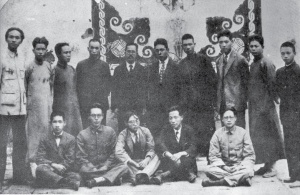
Korean anarchistsThe Korean anarchist movement wanted to build an independent self-governing anarchist society, a cooperative system of the masses of the Korean people. They wanted to take civilisation from the capitalist class, and return it to the popular classes. By doing so, the capitalist and colonial society that existed in Korea (as elsewhere in Africa and Asia and east Europe) would be replaced with a new society. This new society would be based on the principles of freedom and equality, that guarantee the independent self-rule of the producing classes: the working class and the peasantry.

The Story of the Korean Anarchists and the
Anarchist Revolution in Manchuria, 1929-1931

Who was Kim Joa-Jin, Korean Anarchist Revolutionary?

by Eric Every (Tokologo African Anarchist Collective)
Kim Jao-jin was born in 1889 to a wealthy family. Like many of his generation, his life was shaped by the Japanese imperial government’s colonisation of Korea. This began formally in 1910, but key aspects of Japanese control dated to 1895. The year 1919 saw a massive wave of struggle against colonialism: the March 1st Movement. This was part of a global series of uprisings.
Kim became involved in the Korean Independence Army (KIA). In 1920, he helped lead a famous defeat by the KIA of a Japanese army division at the battle of Ch’ing-Shan. At the same time, he became drawn to anarchism by his relative, Kim Jong-Jin. Anarchism / syndicalism was a very powerful force in the Korean national liberation and popular class struggles. Japanese anarchists worked closely with Korean anarchists: they knew the Japanese ruling class was also their enemy.
In 1925, Kim formed the anarchist group, the “New People’s Society.” Working closely with the Korean Anarchist Federation in Manchuria and the Korean Anarcho-Communist Federation, in 1929  he helped launch (with KIA support) a large anarchist revolutionary zone in Shinmin in Manchuria, in the Korean borderlands. A large Korean population lived here; Japanese imperial power was not as strong as in the Korean peninsula. The zone was run through the Korean People’s Association in Manchuria, also called the “General League of Koreans.”
From 1929-1931 we can speak of an anarchist revolution in this area. It was based on the peasantry and the military.
Kim was assassinated by a Korean Communist Party member while working in a cooperative. The Communists hated the anarchists. They wanted to form a one-party dictatorship, as existed in Russia.

The Story of the Korean Anarchist Revolution: Decolonisation through Anarchism

by Lucky Sumione (Tokologo African Anarchist Collective)
The Korean anarchist movement wanted to build an independent self-governing anarchist society, a cooperative system of the masses of the Korean people. They wanted to take civilisation from the capitalist class, and return it to the popular classes. By doing so, the capitalist and colonial society that existed in Korea (as elsewhere in Africa and Asia and east Europe) would be replaced with a new society. This new society would be based on the principles of freedom and equality, that guarantee the independent self-rule of the producing classes: the working class and the peasantry.
The Korean movement had important strengths. These included the support of a large sector of the Korean Independence Army (KIA), centred on the anarchist Kim Jao-Jin. He was an anarchist military leader sometimes compared to Nestor Makhno of the anarchist revolution in the Ukraine (1918-1921).
Anarchists like Kim worked closely with the Korean Anarchist Federation in Manchuria and the Korean Anarcho-Communist Federation (KAF-M) to create a large anarchist revolutionary zone in Shinmin, Manchuria, in the Korean borderlands.
How did the Korean anarchist structures make decisions?
In Shinmin, a system of administration was organised as the Korean People’s Association in Manchuria, also known as the General League of Koreans. Its aim was to create an independent self-governing cooperative system of the Korean people, who had assembled their “full power” to fight for the people by struggling against Japanese imperialism.
There were three key structures. First, there was the section of the KIA linked to Kim. Second, there were the specific anarchist political organisations, the Korean Anarchist Federation in Manchuria and the Korean Anarcho-Communist Federation. Third, there were the mass structures created in Shinmin. These were initiated by the Kim wing of the KIA along with the KAF-M, which formed the Korean People’s Association.
The structure was federal, going from village meetings to district and area conferences. The Korean People’s Association also had executive departments to deal with agriculture, education, propaganda, finance, military affairs, social health, youth and general affairs. Full-time staff in these departments received no more than the average wage.

What Were the Aims of the Korean Anarchists?
Anarchism, Syndicalism and Decolonisation

by Leila Veerapan-Lewis (Tokologo African Anarchist Collective)
The Korean anarchists’ views, as represented by the Talwhan (“Conquest”) group, outlined a vision of anarchist society free of both (Japanese) imperialism and local (Korean) capitalism and landlordism. They wanted a free independent Korea that did not just replace a foreign elite with a local elite.
Their statement of intent included:
  1. Do not allow the existence of oppression and the state;
  2. Oppose power by elites, and the rule of privileged minorities over the majority;
  3. No private property: instead, a common property system under a non-state system of control;
  4. Instead of a civilisation run by an elite, society and civilisation must be well integrated with each other;
  5. The individual will consume according to her or his own demand, and produce according to her or his own ability;
  6. Free communism through autonomous (independent) producers’ (working class and peasant) organisations;
  7. There is no state, and no political elite, but instead independent self-governace;
  8. Taking Korea back from the Japanese capitalist government;
  9. Refusing to make a deal with the capitalist class of the native country of Korea, or to give independent Korea to the Korean elite;
  10.  To provoke a spontaneous upsurge of the masses as the motor of decolonisation and anti-capitalism.

CONCLUSION: What Can We Learn?

by Tokologo African Anarchist Collective
The Korean anarchist revolution was a heroic struggle of the working and poor people. It fought for decolonisation through anarchism. Power and wealth were not to be simply transferred from a foreign (in this case, Japanese) ruling class to a local (in this case, Korean), ruling class. It was to be transferred to the popular classes, in an anarchist manner. The anarchists would work with the nationalists sometimes, but general pushed an independent class line, anarchism, as an alternative.
What happened to their struggle? Partly, they were weakened by difficult circumstances: a situation of war was taking place in the region, in which many big powers were involved: the Japanese empire, the Russian Marxist dictatorship which backed the Communists, the Chinese and Korean nationalists.
There were also divisions amongst the anarchists, which saw some anarchists making serious revisions in their theory: a group around Ha Ki Rak would later run an anarchist political party in Korean state elections! This section of the anarchists absorbed much of the nationalist approach, and this limited their ability to challenge the nationalists with force and with ideas – essential tasks to spreading the revolution into areas controlled by the nationalists. The revolution did not manage to spread into China and into the Korean peninsula, or into Russia.
Finally, Japan got embroiled in war with Russia and Japan, as part of the Second World War; this was followed by the Cold War between Russia and America. The American ruling class conquered the Japanese state, and then placed Korea under American control. A war broke out, and the country was eventually split into a Russian- and American-backed North and South, each run by dictators.

Friday, December 2, 2016

My Opinion: Donald Trump risks China rift with Taiwan call?


Unfortunately, China is offering Taiwan a nation to be a part of and the U.S. is only offering Taiwan more colonization without a chance for independence. The U.S. uses Taiwan as a jumping point to exploit all of Asia outsourcing sweatshops for American corporations and its capitalist cronies.The policy of the U.S. towards Taiwan hasn't changed since WW II where their planes killed more citizens than Japanese. Besides ignoring the murder of thousands of Taiwan intellectuals by the KMT proxies on 2-28-47, the U.S. stationed military here in the world record longest martial law dictatorship until '79, introduced neo-liberal two party false democracy without promoting workers unions so that salaries have been stagnant here for 18 years while Chinese workers' salaries have caught up


Donald Trump risks China rift with Taiwan call

First US-Taiwanese presidential contact since diplomatic relations were cut in 1979


First US-Taiwanese presidential contact since diplomatic relations were cut in 1979Donald Trump risks opening up a major diplomatic dispute with China before he has even been inaugurated after speaking on the telephone on Friday with Tsai Ing-wen, the president of Taiwan.
The call, confirmed by four people, is believed to be the first between a US president or president-elect and a leader of Taiwan since diplomatic relations between the two were cut in 1979.
Although it is not clear if the Trumptransition team intended the conversation to signal a broader change in US policy towards Taiwan, the call is likely to infuriate Beijing which regards the island as a renegade province.
The US has adopted the so-called One China policy since 1972 after the Nixon-Mao meetings and in 1978 President Jimmy Carter formally recognised Beijing as the sole government of China, with the US embassy closing in Taipei the year after.
The Trump team did not initially respond to multiple requests for comment but, after the Financial Times first published news of the call, confirmed that ​the president-elect had spoken with Ms Tsai and “noted the close economic, political, and security ties” between Taiwan and the United States.
A US official said that the Trump transition team did not inform the Obama administration in advance of making the call.
“The Chinese leadership will see this as a highly provocative action, of historic proportions,” said Evan Medeiros, former Asia director at the White House national security council, who now heads Asia research at Eurasia Group.
The Chinese leadership will see this as a highly provocative action, of historic proportions


Evan Medeiros, ex-Asia director at White House national security council


“Regardless if it was deliberate or accidental, this phone call will fundamentally change China’s perceptions of Trump’s strategic intentions for the negative. With this kind of move, Trump is setting a foundation of enduring mistrust and strategic competition for US-China relations.”
Douglas Paal, who as head of the American Institute in Taiwan from 2002 to 2006 was the de facto US ambassador, said that he was not aware of any such telephone calls between US and Taiwanese presidents since 1979.
He said that the call was probably designed to quash speculation in Taipei that a Trump administration would make further concessions on the status of Taiwan to China as it attempts to redefine US relations with Beijing.
“There is no indication so far that a Trump administration would change US policy towards Taiwan,” said Mr Paal, who also held senior positions in the Reagan and George HW Bush White Houses.
Ned Price, the White House National Security Council spokesman, said on Friday evening there was “no change to our longstanding policy on cross-Strait issues”.
“We remain firmly committed to our ‘one China’ policy based on the three Joint Communiques and the Taiwan Relations Act,” said Mr Price. “Our fundamental interest is in peaceful and stable cross-Strait relations.”
Dennis Wilder, former top White House Asia adviser during the George W Bush administration, said: “It would be a mistake for Beijing and others to over-interpret the meaning of a phone call between president-elect Trump and the president of Taiwan.”
He said that Mr Trump was “not steeped in the diplomatic history of US-China relations and probably has not been briefed by the Department of State on the US-China understandings on our unofficial ties to Taiwan.” He added: “We are in uncharted territory with Trump foreign policy, and nations should give him some latitude as he forms his foreign policy team.”
The call with Ms Tsai is not the first controversy that Mr Trump has courted with his conversations with world leaders since the election.
The Philippines government said on Friday that Mr Trump had invited the country’s president, Rodrigo Duterte, to visit the White House next year during a call between the two men.
Since taking office earlier this year, Mr Duterte has threatened to tear up major parts of the military alliance with the US, and a meeting with Barack Obama at a summit earlier this year was cancelled after he called the American president a “son of a whore”. The Trump transition team confirmed the call on Friday evening but made no mention of an invitation to Washington.
In a readout provided by the Pakistani government of a call between Mr Trump and prime minister Nawaz Sharif, the president-elect called the country “amazing” and “fantastic” and appeared to suggest that he might visit Pakistan, remarks which caused consternation in some quarters in India.
The state department said that it had not helped organise the Philippines or Pakistan calls and had not provided any advice ahead of the conversations.

Copyright The Financial Times Limited 2016. All rights reserved. You may share using our article tools. Please don't cut articles from FT.com and redistribute by email or post to the web.